
CORE COMPETENCIES FOR HEALTH PROMOTION MODEL CURRICULUM
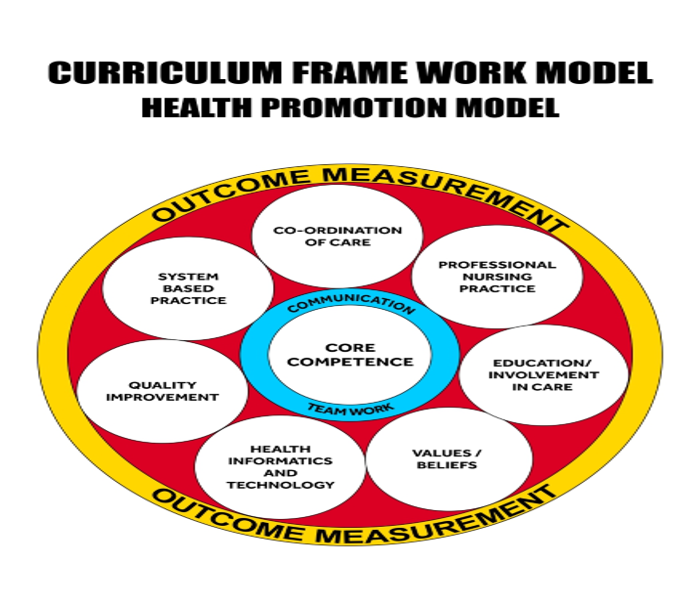
I Core Competence
Demonstrate integrated knowledge, skills, attitudes, and values essential for safe, effective, and patient-centered health promotion practice.
Key Domains and Related Competencies
- Communication
- Effectively communicate with patients, families, and healthcare team members.
- Use therapeutic communication techniques to promote health and well-being.
- Demonstrate cultural sensitivity and respect in all communications.
- Teamwork
- Collaborate effectively within interdisciplinary healthcare teams.
- Participate in shared decision-making to improve patient outcomes.
- Demonstrate leadership and accountability within team roles.
II Domain-Specific Competencies
1. Co-ordination of Care
- Coordinate and manage comprehensive patient care across settings.
- Integrate services to ensure continuity and quality of care.
- Advocate for patient needs in complex care environments.
2. Professional Nursing Practice
- Apply evidence-based knowledge to deliver safe, ethical, and high-quality nursing care.
- Adhere to professional standards and legal requirements.
- Engage in lifelong learning and professional development.
3. Education/Involvement in Care
- Educate patients, families, and communities to promote health and prevent illness.
- Empower patients to actively participate in their own care.
- Develop and implement health education plans.
4. System-Based Practice
- Understand and navigate healthcare systems and policies.
- Apply quality and safety principles in care delivery.
- Advocate for system changes to improve patient care.
5. Quality Improvement
- Identify areas for improvement in practice.
- Participate in quality improvement initiatives.
- Use data to measure outcomes and enhance practice.
6. Health Informatics and Technology
- Utilize health information technologies to support patient care & data monitoring.
- Maintain confidentiality and data security.
- Integrate informatics in clinical decision-making.
7. Values/Beliefs
- Practice care that respects patient values, beliefs, and preferences.
- Demonstrate ethical reasoning and decision-making.
- Advocate for culturally competent and holistic care.
8. Outcome Measurement
- Evaluate and reflect on practice outcomes.
- Use feedback to continuously improve competence.
- Contribute to measuring and reporting health outcomes.
Curriculum Framework:-
PROGRAME OUTCOME FOR B.Sc. NURSING PROGRAME
1. PO1: Nursing Knowledge
Apply knowledge from physical, biological, and behavioral sciences, medicine, and nursing to provide holistic nursing care to individuals, families, and communities.
2. PO2: Clinical Competence
Demonstrate competency in providing comprehensive nursing care through evidence-based practice in diverse health care settings.
3. PO3: Critical Thinking and Decision-Making
Use critical thinking and clinical reasoning to make sound judgments and decisions in nursing practice.
4. PO4: Communication Skills
Communicate effectively with individuals, families, and members of the health team to ensure collaborative and patient-centered care.
5. PO5: Professionalism and Ethics
Practice within the framework of professional ethics, legal boundaries, and the standards of nursing practice.
6. PO6: Leadership and Management
Demonstrate leadership and managerial skills in clinical and community health settings to improve patient outcomes and health care delivery.
7. PO7: Health Promotion and Education
Plan and implement health education and promotion activities for disease prevention and health maintenance.
8. PO8: Research and Evidence-Based Practice
Incorporate research findings into nursing practice and participate in nursing and health-related research activities.
9. PO9: Lifelong Learning
Engage in lifelong learning and continuing education to keep up with advances in health care and nursing practice.
10. PO10: Technology and Informatics
Use modern tools, technologies, and informatics effectively in nursing practice and documentation.
PRS COLLEGE OF NURSING, PALIYODE
BSC NURSING COURSE OBJECTIVE
B.Sc. Nursing Course Objectives
The Bachelor of Science in Nursing (B.Sc. Nursing) program is designed to achieve the following objectives
- Develop Professional Competence
To prepare competent nursing graduates with a sound foundation in theory and practice to provide high-quality, evidence-based nursing care across various healthcare settings.
- Promote Holistic Care
To equip students with the knowledge and skills to deliver comprehensive, patient-centered care that addresses physical, emotional, social, and spiritual health needs.
- Foster Ethical and Legal Responsibility
To instill ethical principles, accountability, and adherence to legal standards in nursing practice.
- Enhance Communication and Interpersonal Skills
To develop effective communication and collaboration skills for working with individuals, families, communities, and interdisciplinary healthcare teams.
- Encourage Critical Thinking and Decision-Making
To cultivate analytical thinking, clinical judgment, and problem-solving abilities in planning and delivering nursing care.
- Promote Research and Evidence-Based Practice
To foster an understanding of nursing research and its application in improving patient outcomes and advancing the profession.
- Support Leadership and Management Skills
To train students in leadership, supervision, and healthcare management for efficient delivery of nursing services.
- Prepare for Lifelong Learning
To motivate graduates to pursue continuous professional development and higher education.
- Advance Community and Public Health
To enable students to participate actively in health promotion, disease prevention, and rehabilitation at the community and public health levels.
- Serve Society and Promote Social Justice
To nurture a sense of social commitment and responsiveness to health disparities, encouraging active engagement in meeting the healthcare needs of underserved and diverse populations.
 360° Interactive Campus Spot